
Prominent individuals, including Infosys co-founder Nandan Nilekani and Zerodha founders Nithin and Nikhil Kamath, have appeared on a notice list during Karnataka's Special Intensive Revision (SIR) of electoral rolls due to various discrepancies. Authorities clarify that these notices are part of a verification process and officials will assist in resolving the issues without inconveniencing the individuals, also debunking reports about CM D K Shivakumar's mother receiving a notice.

The Election Commission on Monday defended its decision to conduct the Special Intensive Revision (SIR) of electoral rolls in the Supreme Court, saying the exercise was undertaken in accordance with the law and the three orders on its roll-out were approved unanimously by the Commission's three members.

The Election Commission of India has introduced a mandatory declaration for new voters, requiring them to provide parental details from the Special Intensive Revision (SIR) exercise. This move, aimed at streamlining voter mapping, has sparked controversy, with some Election Commissioners deeming it "illegal" and "unauthorised" due to potential negative impacts on young voters.

The Supreme Court is set to hear pleas challenging Chief Election Commissioner Gyanesh Kumar's alleged unilateral decisions without the concurrence of other election commissioners. The petitions seek his suspension and question actions like altering voter registration forms and handling electoral roll revisions in Goa and West Bengal, highlighting concerns over the multi-member character of the Election Commission.

Several political parties in Tamil Nadu, including the ruling TVK and opposition DMK, walked out of an all-party meeting convened by the Election Commission. They demanded the resignation of Chief Election Commissioner Gyanesh Kumar, citing alleged irregularities and a lack of transparency in the previous Special Intensive Revision of electoral rolls, where millions of voters were reportedly removed or flagged. The AIADMK and BJP attended the meeting, with AIADMK also raising concerns about the large number of affected voters.

The Election Commission of India has told the Delhi high court that two voters, whose names were deleted from the electoral rolls after they could not complete the enumeration process during the Special Intensive Revision in the national capital, can fill Form 6 for redressal of their grievance.

Delhi's draft electoral rolls show a significant reduction in voters, with affluent constituencies experiencing a higher percentage drop (37.4%) compared to areas with unauthorised colonies and Jhuggi-Jhopdi clusters (35.7%). Overall, 47.5 lakh voters have been excluded, with officials noting Delhi's exclusion rate is the highest among states undertaking Special Intensive Revision. Citizens have until September 30 to file claims and objections before the final roll is published on November 4.
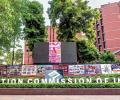
The Election Commission has clarified that its ECINet platform is decentralised, with statutory functions performed only by designated officials, not headquarters staff. This comes after concerns were raised about the centralisation of electoral roll databases. The EC also defended the legality of an additional declaration sought from new voters during the Special Intensive Revision, citing unanimous commission approval and a Supreme Court judgment.

Three BJP allies, including LJP (Ram Vilas), TDP, and RLM, have called on the Election Commission for a clearer explanation regarding concerns raised by two Election Commissioners over the voter list revision process. Union Minister Chirag Paswan warned that public faith in elections was at stake, while the EC asserted that differing views among its members were normal and final decisions were unanimous.

The Supreme Court is set to hear a plea filed by Congress leader Rahul Gandhi and other opposition figures on Thursday regarding alleged large-scale voter deletions and irregularities in the Special Intensive Revision of electoral rolls. The petition seeks an independent audit of these deletions and modifications, and a direction to prevent further deletions without due process.
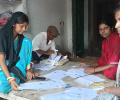
The Election Commission will publish the draft electoral rolls for Bihar assembly polls, triggering a period for claims and objections amid fears of voter exclusion.

Activists Prashant Bhushan, Anjali Bharadwaj, Yogendra Yadav, and Neha Bora have raised serious questions about the Election Commission's decision-making process for the nationwide Special Intensive Revision (SIR) of electoral rolls. They allege contradictions in the EC's statements, lack of transparency regarding decisions, concerns over centralisation of the electoral database, and unauthorised changes to Form 6, calling for greater accountability and disclosure of records.

Former Chief Election Commissioners have voiced strong objections to reported 'illegal' changes in voter registration Form 6 and the centralisation of electoral roll control, raising serious concerns about the integrity of future elections.

The Supreme Court has sought a response from the Election Commission regarding a plea by TMC MP Dola Sen, who alleges unauthorised changes to Form 6 during the Special Intensive Revision of electoral rolls in Bihar. Sen claims the EC wrongly suggested the Supreme Court approved these changes. The EC, in its affidavit, defended the SIR process, stating no changes were made to the statutory Form 6 and that all decisions were unanimous. The court has given petitioners 10 days to respond to the EC's affidavit.

CJP spokesperson Ashutosh Ranka has reiterated the outfit's demand for CEC Gyanesh Kumar's resignation, alleging the exclusion of 13 crore names from electoral rolls and questioning the BJP's defence of Kumar. The CJP plans a nationwide protest starting October 2, vowing not to back down until Kumar resigns, and has launched the 'Election Commission Thik Karo' campaign. Ranka also accused the CEC of fraudulently redrawing constituencies in Assam to benefit the ruling party.
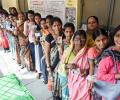
Data from the State Election Commission reveals that over 11 lakh voters in Mumbai have duplicate enrolments in the electoral roll. The SEC has extended the deadline for submitting objections, and opposition leaders have alleged irregularities in the voter list revision.
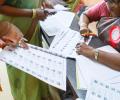
The Election Commission has launched a special drive to include eligible citizens who were omitted or deleted during the recent Special Investigative Review (SIR) exercise, as well as to register new and young voters. This initiative follows accusations from opposition parties regarding disenfranchisement and aims to ensure no eligible citizen is left out of the electoral process.

The Supreme Court stated it has not approved any modifications to Form 6, used for electoral roll inclusion, during the Special Intensive Revision. This observation came during the hearing of a Public Interest Litigation (PIL) challenging alleged unilateral decisions by the Chief Election Commissioner regarding changes to Form 6 and electoral roll revisions in states like Goa and West Bengal, without the concurrence of his colleagues. The court issued notice on the plea, highlighting concerns over collective decision-making within the Election Commission.

The Election Commission of India has introduced new restrictions on the number of Form 7 applications an individual can submit, both online and offline. This move aims to prevent bulk or malicious attempts to remove legitimate voters from electoral rolls and streamline the objection process, especially after reports from states like Karnataka and Odisha.

India's Election Commission's centralised voter database systems, ERONET and ECINet, are under scrutiny following concerns raised by Election Commissioners Sukhbir Singh Sandhu and Vivek Joshi regarding the centralisation of electoral rolls and control available to state election officials. The article explains how these systems work and why they are currently in the news.

Thousands of young men and women, joined by prominent personalities, protested at Shivaji Park in Mumbai, demanding the resignation of Chief Election Commissioner Gyanesh Kumar despite police denial of permission. Organised by the Cockroach Janta Party (CJP), the agitation highlighted concerns over transparency in CEC appointments and alleged irregularities in electoral roll revisions.

The Election Commission has revised the schedule for the Special Intensive Revision (SIR) of electoral rolls in Maharashtra, extending the deadline for filing claims and objections and pushing the publication of the final electoral roll to November 4.
Former RBI Governor Bimal Jalan, ex-IAF Chief NAK Browne, and other prominent figures in Delhi have received notices regarding discrepancies in their voter details during the ongoing Special Summary Revision (SIR) of the electoral rolls. Over 33 lakh electors have been identified for such notices, with a deadline of September 30 for responses.

Leaders of the INDIA bloc on Tuesday announced a protest at Freedom Park in Bengaluruon November 5 against the Special Intensive Revision (SIR) of electoral rolls and Chief Election Commissioner Gyanesh Kumar, alleging that constitutional institutions were being misused to undermine democracy.
The Supreme Court has directed the Election Commission to provide details on the disposal of appeals by tribunals concerning deletions from West Bengal's electoral rolls during the Special Intensive Revision (SIR). The court emphasised the need to track the progress of these appeals, which were set up to address irregularities. It also clarified that grievances regarding the denial of PDS benefits due to voter deletion should be taken up with the Calcutta High Court.

The Election Commission of India has revised instructions for the Special Intensive Revision of voter rolls, allowing voters served notices for "No Mapping" or "Logical Discrepancy" categories to avoid physical appearance. Booth Level Officers will collect documents at residences, and submissions can also be made via WhatsApp or during special camps, ensuring a more accessible process for electors.

Actor Prakash Raj has claimed his name was deleted from Bengaluru's electoral rolls during the Special Intensive Revision process, affecting 6.5 million voters. He expressed frustration and questioned the ruling dispensation, while reports indicate his name was marked as "permanently shifted" due to a previous case involving multiple voter IDs.

The INDIA bloc is set to convene on September 30 in New Delhi to formulate a unified strategy regarding the Election Commission, focusing on the removal of Chief Election Commissioner Gyanesh Kumar and concerns over the Special Intensive Revision of electoral rolls. The meeting will also address coordinated protests and the CEC selection process, bringing together diverse opposition parties.

The Greater Bengaluru Authority (GBA) clarified that no notice was issued to Bharat Ratna awardee Prof C N R Rao regarding an electoral roll discrepancy. Instead, the Booth Level Officer recommended including his name despite a variation in how it was recorded over the years, ensuring his inclusion in the final electoral roll.

The Delhi High Court has ruled that Booth Level Agents (BLAs) of political parties are not liable for false details in electoral enumeration forms that cannot be personally verified. The court clarified that BLAs are only responsible for verifiable information, such as an elector's photograph, and struck down the Election Commission of India's mandate requiring BLAs to provide personal undertakings for all details.

The Supreme Court has expressed concern to the Election Commission regarding the "almost mechanical" issuance of notices under the Special Intensive Revision (SIR) exercise in Delhi, urging additional safeguards and clarification on "logical discrepancy" criteria. The court is hearing a petition challenging the EC's process, which has seen millions of voters receive notices, raising practical difficulties and concerns about potential disenfranchisement.

A group of 124 former IAS, IFS, IPS, and allied services officers have issued an open letter defending the Election Commission (EC) and the Special Intensive Revision (SIR) process. They argue that the electoral system cannot be deemed rigged only when a party loses, citing instances where the ruling BJP lost elections under the same EC. The officers highlight the legitimacy and necessity of the SIR for cleaning voter rolls and underscore the robust safeguards within India's electoral system.

West Bengal Chief Minister Mamata Banerjee has accused authorities of deleting names of people from the Matua and minority communities from voter rolls in the state following a Special Intensive Revision (SIR) exercise.

Trinamool Congress leader Saket Gokhale has accused the Election Commission of India (ECI) of withholding details about the software and algorithm used for the Special Intensive Revision (SIR) of electoral rolls. Citing an RTI response, Gokhale highlighted the ECI's claim that the information relates to "commercial confidence, trade secrets and intellectual property matters," raising concerns about transparency in the electoral process.
The Election Commission has removed an additional declaration related to the Special Intensive Revision (SIR) from the online voter enrolment Form 6 in states where the SIR process is complete. This decision follows internal objections from Election Commissioners Sukhbir Singh Sandhu and Vivek Joshi regarding changes to the form and the process. The EC maintains the declaration was SIR-specific and not an amendment to Form 6 itself.

The Delhi poll body has issued notices to several prominent voters, including Chief Minister Rekha Gupta and AAP supremo Arvind Kejriwal, for discrepancies in their enumeration forms during the ongoing Special Intensive Revision (SIR) exercise. While Gupta's entry has been validated, millions of other voters, including other political figures, have received notices for issues like age-related mismatches or being unmapped with previous SIR records, requiring them to submit documents by October 29.

AASU says the final register does not accurately reflect the number of undocumented migrants who entered Assam from Bangladesh after the cut-off date.

Former Election Commissioner Ashok Lavasa has strongly criticised the ongoing special intensive revision (SIR) of electoral rolls, labelling it an 'unfair procedure' despite its legal standing, raising concerns about mass voter deletions and the erosion of democratic trust.

The Election Commission reports a significant reduction in West Bengal's electoral rolls following a Special Intensive Revision, with nearly 9.1 million voters deleted.

Former civil servants and rights activists have issued a "people's impeachment" notice demanding the resignation of Chief Election Commissioner (CEC) Gyanesh Kumar. They allege six charges against him, including undermining the Election Commission's functioning, mass disenfranchisement through Special Intensive Revision (SIR) of electoral rolls, and compromising political impartiality. The group, including G K Pillai and Najeeb Jung, was prevented from submitting the notice at the EC office.
